
Vietnam Embassy Attestation: 2025 Guide
Discover everything you need to know about Vietnam embassy attestation in our comprehensive 2025 guide. Learn the process, requirements, and tips to ensure a smooth application experience.
11/12/20257 min read
Understanding Embassy Attestation
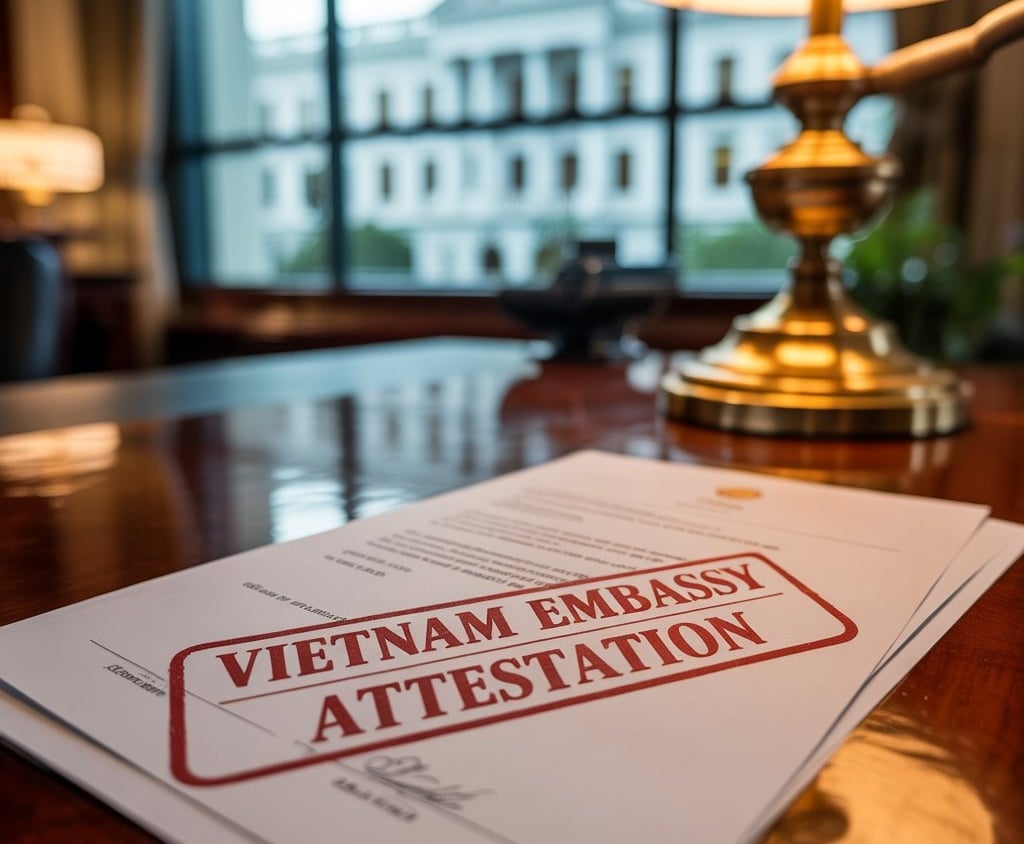
Embassy attestation is a process that ensures the authenticity of documents intended for use in a foreign country. This procedure is essential to verify that documents such as educational certificates, marriage licenses, or corporate papers are genuine and legally recognized. When it comes to engaging with international matters, embassy attestation serves as a safeguard against fraudulent activities and misrepresentation, thereby promoting trust in the validity of documents.
The necessity of embassy attestation arises particularly in relation to the legal requirements of foreign countries. Many nations mandate that documents submitted by foreign nationals must be certified by their respective embassies to ensure that the content meets their specific regulations. For instance, when a Vietnamese citizen wishes to marry a foreign partner or pursue higher education abroad, the local authorities of that foreign country often require that the necessary documents be attested by the Vietnamese embassy to guarantee their legitimacy.
Vietnamese embassies play a crucial role in this attestation process, acting as intermediaries that assess and validate documents before they are submitted for official use abroad. The types of documents typically requiring attestation from Vietnamese embassies include academic transcripts, birth and death certificates, personal identification papers, and various legal contracts. Each of these documents must go through a systematic verification process to establish their authenticity before being presented to foreign authorities.
Moreover, the importance of having documents properly attested cannot be understated. Failure to comply with the attestation requirements of a foreign nation may result in delays, rejections, or complications in legal matters. Therefore, understanding the process of embassy attestation is vital for anyone engaging in international transactions or relocation, ensuring that all legal documents are recognized and accepted overseas.
The Document Preparation Process
Preparing the necessary documentation for attestation from the Vietnamese embassy is a crucial step in ensuring a smooth process. The first step involves identifying all the relevant documents that may require attestation. These typically include personal identification documents, educational certificates, marriage certificates, and any legal documents pertinent to your needs. It is important to ascertain the specific requirements laid out by the embassy, as they can vary based on the type of document and individual circumstances.
Once the required documents are identified, it is essential to ensure that they are in the correct format. Most embassies have prescribed formats for certain documents, particularly for translation purposes. If your documents are not originally in Vietnamese or English, you will need to obtain certified translations. These translations should be performed by a recognized translation service, which often includes a notarization process to verify accuracy. Failure to adhere to specified formats may delay the attestation process.
After gathering all required documents, it is advisable to verify each document for authenticity. This may include obtaining notarizations from a public notary or relevant local authorities before presenting them to the embassy. For instance, educational and professional qualifications typically need to be notarized. Furthermore, it is useful to create copies of all documents, both for your records and to facilitate review during the attestation process. A well-organized and comprehensive document set will not only expedite the processing time but also reduce the likelihood of errors or omissions.
In preparation for your embassy visit, it is beneficial to check the current regulations and guidelines regarding attestation, as these can change. Being aligned with the latest requirements ensures that you are fully prepared, ultimately leading to a more efficient and successful attestation experience at the Vietnamese embassy.
The Attestation Procedure at the Vietnamese Embassy
Obtaining an attestation from the Vietnamese embassy involves a systematic procedure that must be carefully followed to ensure smooth processing. Initially, it is imperative for applicants to book an appointment with the embassy. This can generally be done online through the official embassy website or by contacting the consular section directly. Securing an appointment in advance is advisable to avoid any unnecessary delays, as walk-ins may not be accommodated.
Once the appointment is confirmed, the next step is to gather all necessary documents for submission. Typically, applicants are required to present original documents along with photocopies. These documents usually include the original certificate or document needing attestation, a form of identification such as a passport, and any additional paperwork required by the embassy, which may vary depending on the specific case. It is crucial to check the embassy’s website for the latest requirements to ensure all necessary paperwork is prepared ahead of time.
After submitting the documents at the embassy, applicants are often advised to inquire about the estimated waiting times for the attestation process. This can vary based on the volume of requests at the time of submission. Typically, the process may take a few days to a couple of weeks. During this waiting period, the embassy staff will verify the authenticity of the documents submitted, which may include contacting relevant authorities or institutions.
Lastly, fees associated with the attestation process are usually payable at the time of submission. The cost may vary depending on the type of document and the specific services required. It is advisable to check the embassy's fee schedule before attending the appointment to ensure correct payment is prepared.
Processing Times and Costs
The process of document attestation at the Vietnamese embassy can vary significantly in terms of processing times and associated costs. Generally, the standard processing time for document attestation ranges from a few business days to several weeks, depending on multiple factors. One primary factor is the type of document being attested; for instance, academic certificates may take less time compared to legal documents or business contracts.
Urgency plays a crucial role in determining processing times. Many Vietnamese embassies offer expedited services for urgent requests, allowing individuals to receive their attested documents within 24 to 72 hours. However, this expedited service often incurs additional fees, which can significantly increase the total cost of the attestation process. Therefore, it is advisable to evaluate the urgency of your request and opt for the expedited service only when necessary.
In terms of costs, individuals should expect fees that vary by the type of document and the specific embassy. Typically, the attestation fees at the Vietnamese embassy can range from $30 to $100. Additional costs may include fees for document translation, notarization, or courier services if you choose to have your documents sent via mail. It is essential to check with the respective embassy for the most accurate and up-to-date fee structure as policies and costs may differ across regions and change over time.
Furthermore, an increased demand for services or public holidays can lead to longer processing times. Hence, planning ahead is advisable. Understanding these factors will not only help in estimating the time required for document attestation but also in budgeting for the associated costs, ensuring a smoother experience during this essential process.
Common Challenges and How to Overcome Them
When seeking Vietnam embassy attestation, applicants often encounter various challenges that can hinder the smooth completion of their documentation process. Among the most common issues faced are document rejections, incorrect submissions, and delays in processing. Understanding these challenges and knowing how to address them can significantly improve the attestation experience.
One prevalent issue is the rejection of documents by the embassy. This can occur for several reasons, including insufficient information, errors in the documents, or failure to meet specific requirements. To mitigate this risk, it is crucial to carefully review the embassy’s guidelines before submitting your application. Ensuring that all documents are accurate, complete, and properly formatted can help prevent rejection due to oversight. It is also advisable to double-check that all required documents are included in the submission package.
Another challenge arises from incorrect submissions. This may relate to submitting a document that has not been properly notarized or validated by the relevant authorities. Applicants should familiarize themselves with the required authentication process to ensure compliance before approaching the embassy. Engaging with a knowledgeable agent or consultant can be beneficial, as they can guide you through the essential validation steps to make the process smoother.
Delays in processing can also pose a significant hurdle. These delays might result from a high volume of applications at the embassy or unforeseen circumstances such as holidays or changes in policy. To address such issues, applicants should allow ample time for processing and plan their submission well in advance of any deadlines. Regular follow-ups with the embassy can also provide updates on the status of your application and enhance communication. By being proactive and informed, applicants can navigate these common challenges effectively and achieve successful Vietnam embassy attestation.
Post-Attestation Steps and Considerations
Once the attestation process is complete, it is crucial for individuals to follow specific steps to ensure that their documents are effectively utilized, whether within Vietnam or abroad. The first step is to verify that all documentation received is accurate and matches the original documents submitted for attestation. Any discrepancies can lead to complications later, so it is essential to double-check names, dates, and other pertinent information.
Next, individuals should consider the legal validity of their documents based on the country of use. Different jurisdictions may recognize attested documents differently, which is why understanding local regulations is important. It may also be pertinent to verify whether the receiving institution or authority requires further authentication or legalization after the initial attestation—this could involve additional steps or fees.
Additionally, translations might be necessary, especially if the documents will be presented in a country where a different language is spoken. When translating documents, it is advisable to use certified translators who can provide official translations that are accepted by governmental and legal entities. This step helps in maintaining the integrity and validity of the original documents in the new context.
An important consideration post-attestation is to retain multiple copies of all attested documents. This practice is not only prudent but can also be vital in scenarios where documents are misplaced or damaged. Keeping both physical and digital copies ensures that individuals have access to their important papers when needed. Furthermore, maintaining a list of where each document is being used can aid in staying organized and ensuring compliance with various legal requirements.
By taking these steps and considerations seriously, individuals can navigate the complexities involved in using attested documents, ensuring that their efforts are recognized and valid in the intended legal framework.
Additional Resources and Support
When navigating the process of Vietnam embassy attestation, having access to reliable resources can significantly simplify the journey. For individuals seeking clarification or assistance, various official channels and support services are available. The Vietnamese government's official website provides comprehensive information on the attestation process, including the requirements, fees, and insights about documents typically needed for verification.
Additionally, each Vietnam embassy and consulate maintains a dedicated section on their website offering details specific to their location. These sections provide contact information for inquiries and additional guidance tailored to the particular needs of applicants in various regions. If you are in a foreign country, identifying the nearest Vietnamese embassy is crucial. A list of all Vietnamese embassies around the world can be found at Vietnam's Ministry of Foreign Affairs website.
For individuals requiring further assistance or specialized help, particularly when addressing complex cases or legal nuances, consulting with a professional service can be beneficial. Various agencies provide expert help in managing the embassy attestation process, ensuring that all documents are correctly prepared and submitted in a timely manner. Legal advisors knowledgeable about international laws and attestation procedures can also offer insight on navigating any hurdles frequently encountered in this process.
Ultimately, whether utilizing official resources or engaging professional services, it is essential to verify the credentials and reputation of the entity you choose to work with. Emphasizing accuracy and compliance with legal standards ensures that your documents are appropriately attested, enabling smooth dealings with Vietnamese authorities.